Be Careful Adding Pollen to Sugar Syrup for Brood Boosting
There are a few key components to happy, healthy bees… nectar and pollen are two of the key ingredients you must have. Specifically, they need the pollen to feed the queen which in turns helps boost her egg production amoung other factors. In creating a sugar syrup to feed the bees, some beekeepers like to mix a little pollen substitute powder in order to give the bees a little extra pollen and protein for brood production. While this sounds all fine and good, there is a catch.
It’s a perfect breeding ground for small hive beetles!
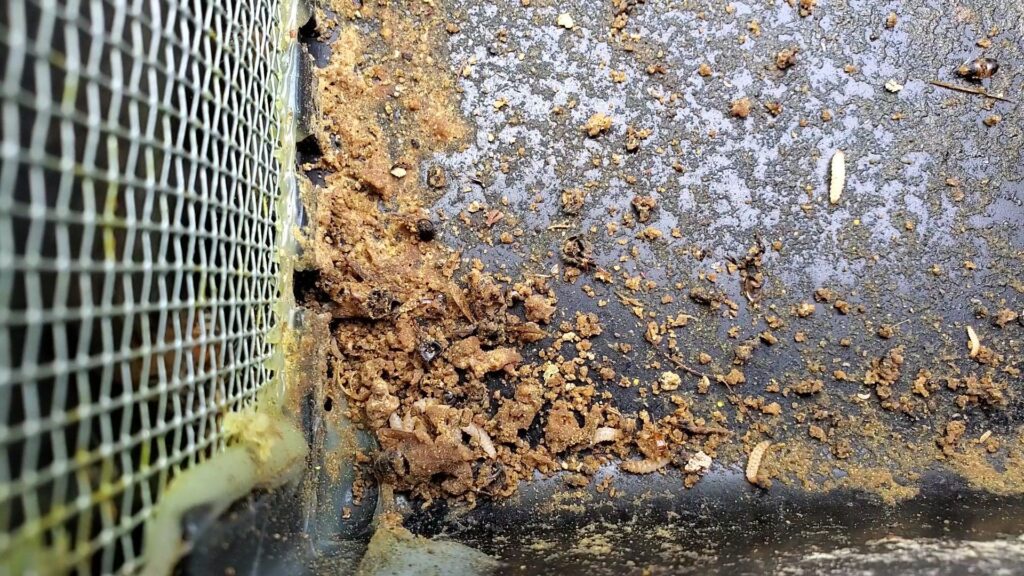
As it turns out, not all of the pollen substitute will stay mixed in the 1:1 sugar syrup, and will eventually settle to the bottom of the container. In the case of hive top feeders, a sediment will form along the bottom. The screen that runs down the middle tends to have gaps large enough for small hive beetles to crawl through, from which they will lay eggs in the pollen mush.
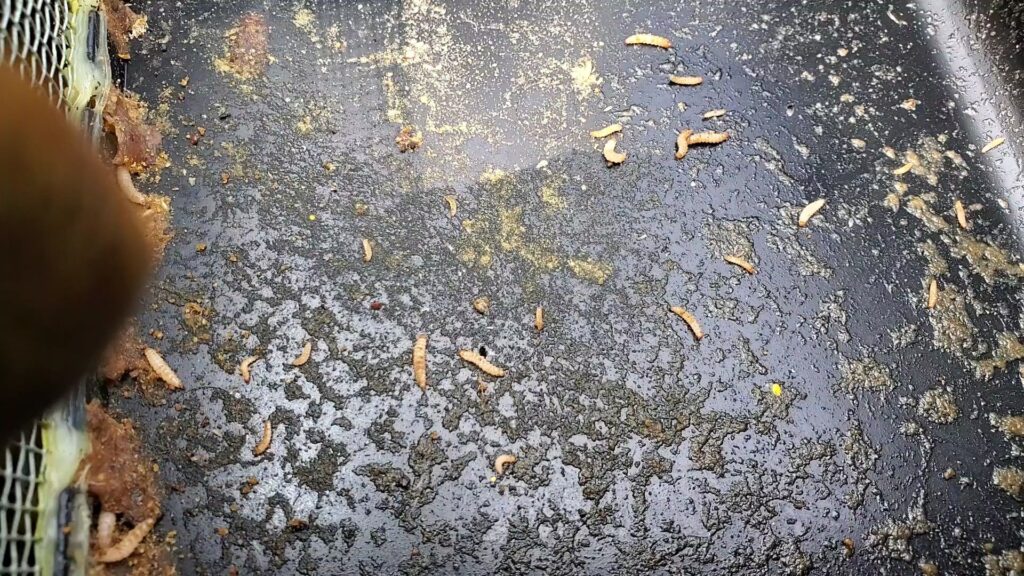
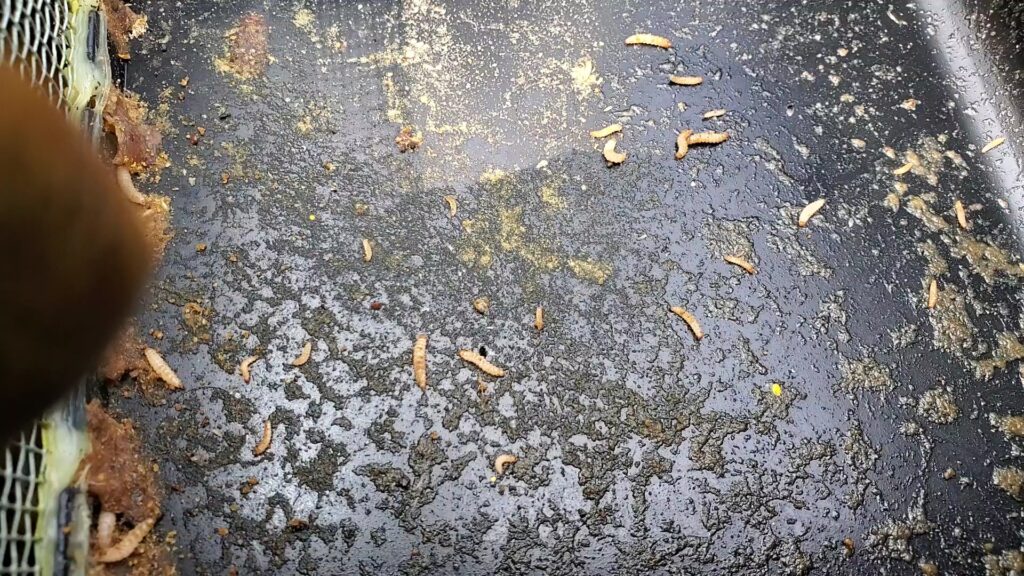
In this example, a hive feeder was fed on September 1st, 2024 with a 1:1 sugar syrup with a splash of Honey B Healthy and a small scoop of UltraBee pollen substitute to help encouage the hive to build up quickly before winter. The above picture illustrates what happened in the duration of 7 days. The syrup was gone, but a sediment of pollen mush remained and was teaming with small hive beetle larvae!
A second hive top feeder installed on a different hive in the same apiary that had the same syrup provided at the same time also had SHB larvae crawling around inside. Both hives are what I would consider healthy, but not overly strong as they both need a little extra nourishment before winter.
Both feeders were promptly removed for cleaning.
While predicting SHB population patterns from year to year carries a lot of variance, one thing that seems to be constant is their populations tend to increase in late August through the fall months. Small hive beetles were seen in other hives on the same day (September 8th, 2024), even in very strong hives.
Lessons Learned
While it is tempting to give the bees a little extra pollen for a brood boost in the late summer and into fall, I would advise against it and just feed simple sugar syrup with maybe a small splash of Honey B Healthy or equivalent supplement and just skip the pollen. If the hive has adequate pollen and bee bread stores on board, they are more than capable of utilizing their resources with the extra syrup you’re providing and it will help reduce the accomodations for the SHB.
About The Author