Do You Need to Wrap Your Hives for Winter?
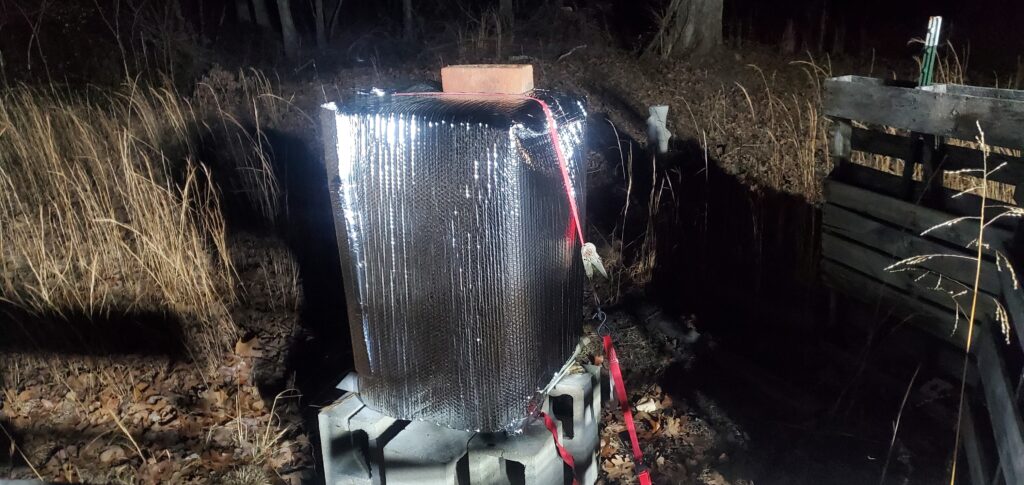
This one comes down to a big judgement call and depends on a lot on how healthy the hive is, how bitterly cold the weather will get and for how long. In the above photo, this was taken the evening before a nasty winter storm was due to arrive with windchills down to -20°F and actual lows to around -9°F for about three days straight. Normal temps were in the 20s or 30s, so a drop this far plus windchills seemed like a bit of a shock, although the bees should already be in cluster at this point.
Could a healthy hive make it through a few days of bitter cold without wrapping? Probably. However, the hive pictured above was a little on the weak side going into winter despite feeding.
The concept of wrapping this hive in the foil bubble wrap insulation is to attempt to reflect the heat from the hive back into the hive and bounce the cold off to the outside. R-value of insulation isn’t very much; however, and after the cold snap passes, removing the wrap should be considered. As once the core hive temperature dips down to equilibrium, then the outside air warms back up, the foil wrap will hold the cold inside the hive and prevent the hive from warming up. One up-side to this could be viewed as a way to prevent sudden temperature swings and may prevent them from breaking cluster too soon, especially if there is one warm day forecast then another temperature crash is coming.
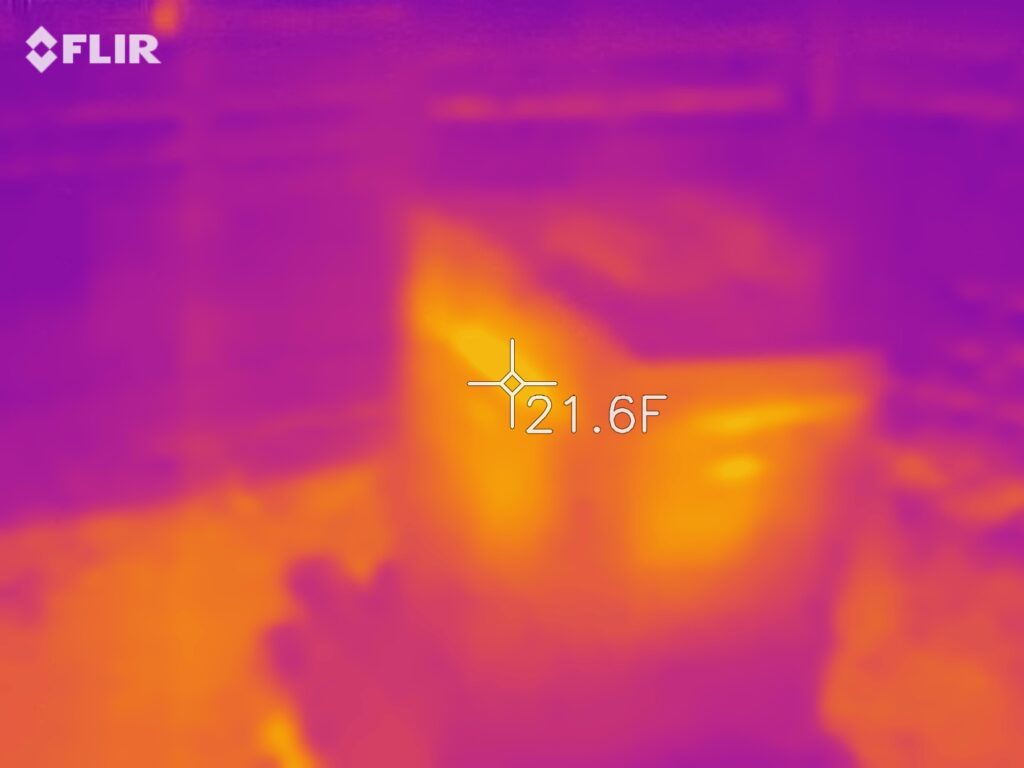
So if a hive is a bit weak, and/or maybe a bit low on food stores, and/or a major winter storm is approaching with lower-than-normal temperatures… and you happen to have some extra insulation lying around, then sure, wrap up the hive(s). However, if it’s just cold for a night and it’s gradual… you can probably save your time and money and just make sure they have plenty of food at the end of winter to help build them up for spring brood. Just be sure there is ventilation and a moisture reduction agent such as a candy board or cedar wood chips to help absorb excess moisture, otherwise you’ll leave winter with a dead cluster of wet bees!
About The Author